
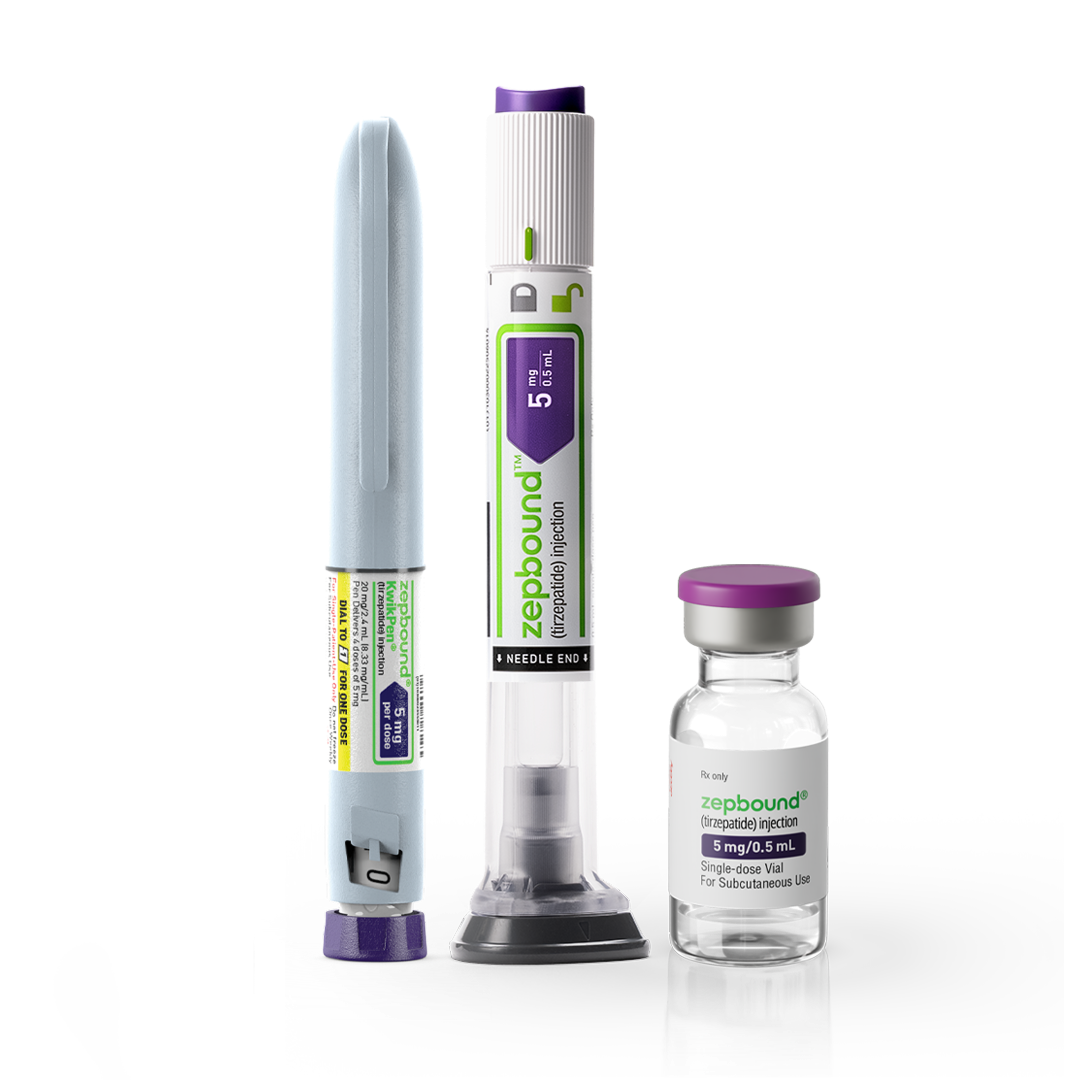
What is Zepbound?
Zepbound (tirzepatide) is a prescription medicine used for weight loss and weight management in adults with obesity or who are overweight and have weight-related medical conditions. It is also used to treat moderate to severe obstructive sleep apnea (OSA) in adults with obesity.
Zepbound is a once-weekly injection used together with a reduced-calorie diet and increased physical activity.
Zepbound works by reducing your appetite and making you feel full sooner and for longer, which helps you to eat less, lose weight, and also maintain weight loss.
Zepbound is a GIP and GLP-1 receptor agonist. Zepbound has a dual mechanism of action, activating two gut hormone receptors, GIP and GLP-1, which makes it significantly more effective than semaglutide for weight loss, as it only activates GLP-1 receptors.
How Well Does Zepbound Work for Weight Loss? Clinical Trial Results
The clinical trial SURMOUNT-5 (NCT05822830) demonstrated that Zepbound patients had a 47% greater weight loss compared to semaglutide over 72 weeks:
- Weight loss: 20.2% Zepbound vs.13.7% semaglutide
- Average weight loss: 50.3 lbs Zepbound vs. 33.1 lbs semaglutide
- Waist circumference reduction: 7.2 inches Zepbound vs. 5.1 inches semaglutide.
Who Can Use Zepbound?
Zepbound is FDA-approved to:
- Reduce excess body weight and maintain weight reduction long term in adults with obesity or who are overweight with weight-related medical problems
- Treat moderate to severe obstructive sleep apnea (OSA) in adults with obesity.
Zepbound vs Mounjaro – What is the Difference?
Zepbound and Mounjaro contain the same active ingredient (tirzepatide), are both given as weekly injections, and both are made by Eli Lilly and Company. However, they have different FDA-approved uses and insurance coverage. Mounjaro is approved for type 2 diabetes management in adults and children 10 years and older, and Zepbound is FDA-approved for chronic weight management and obstructive sleep apnea (OSA) in certain adults.
What is the Cost of Zepbound?
The cost for prescription drugs varies depending on your insurance plan and which pharmacy you use. Refer to the Zepbound Prices, Coupons, Copay Cards & Patient Assistance for more information about the cost of this medicine.
Learn more: Zepbound cost with or without insurance.
Zepbound Side Effects
Common Zepbound Side Effects
The most common Zepbound side effects include:
- Feeling sick, nausea 25%
- Diarrhea 19%
- Constipation 17%
- Indigestion, dyspepsia 9%
- Abdominal pain 9%
- Vomiting 8%
- Injection reactions 6%
- Tiredness, fatigue 5%
- Hypersensitivity reactions 5%
- Hair loss 5%
These common side effects occurred in 5% or more of patients taking Zepbound 5mg in Zepbound clinical trials SURMOUNT-1 (NCT04184622) and SURMOUNT-2 (NCT04657003), two randomized, double-blind, placebo-controlled trials.
Serious Side Effects
Zepbound may cause serious side effects. Call your doctor at once if you have:
- Serious allergic reactions. Zepbound may cause serious hypersensitivity reactions, including anaphylaxis and angioedema. Seek immediate medical attention if there are signs of an allergic reaction, including hives, difficulty breathing, feeling light-headed, swelling of your face, lips, tongue, or throat.
- Severe stomach problems. This medicine has been associated with gastrointestinal side effects. If you have severe pain in your stomach area (abdomen) that will not go away, with or without vomiting, or you may feel the pain from your abdomen to your back. Zepbound is not recommended in patients with severe gastroparesis (delayed gastric emptying).
- Dehydration leading to kidney problems. Diarrhea, nausea, and vomiting may cause a loss of fluids (dehydration), which may cause kidney problems. It is important for you to drink fluids to help reduce your chance of dehydration. Talk to your healthcare provider if you are urinating less than usual, if your urine is a dark yellow, or if you have nausea, vomiting, or diarrhea that does not go away.
- Gallbladder Problems. Acute gallbladder disease has occurred in people using Zepbound and other GLP-1 receptor agonists. Tell your healthcare provider right away if you have symptoms of pain in your upper stomach (abdomen), fever, yellowing of your skin or eyes (jaundice), or clay-colored stools.
- Pancreas problems (pancreatitis). Stop using this medicine and call your healthcare provider right away if you have severe pain in your stomach area (abdomen) that will not go away, with or without vomiting. You may feel the pain from your abdomen to your back.
- Low blood sugar (hypoglycemia). Symptoms may include headache, hunger, weakness, sweating, confusion, irritability, dizziness, fast heart rate, or feeling jittery; or
- Vision changes. Vision changes or eye side effects (diabetic retinopathy) can occur in patients with type 2 diabetes, including blurry vision or blurred vision or any other vision changes.
- Thyroid tumor symptoms. This medicine has a risk of thyroid C-cell tumors. Call your doctor at once if you have symptoms including swelling or a lump in your neck, trouble swallowing, a hoarse voice, or if you feel short of breath.
- Depression or thoughts of suicide. You should pay attention to any changes in your mood, behaviors, feelings, or thoughts. Call your healthcare provider right away if you have any changes to your mental health that are new, worse, or worry you.
- Risk of pulmonary aspiration during general anesthesia or deep sedation. When using this medicine, there is an increased risk of food or liquid getting into the lungs during surgery or other procedures that use anesthesia or deep sedation. Tell all your healthcare providers that you are taking Zepbound before you are scheduled to have surgery or other procedures.
Reviews
There are no reviews yet.